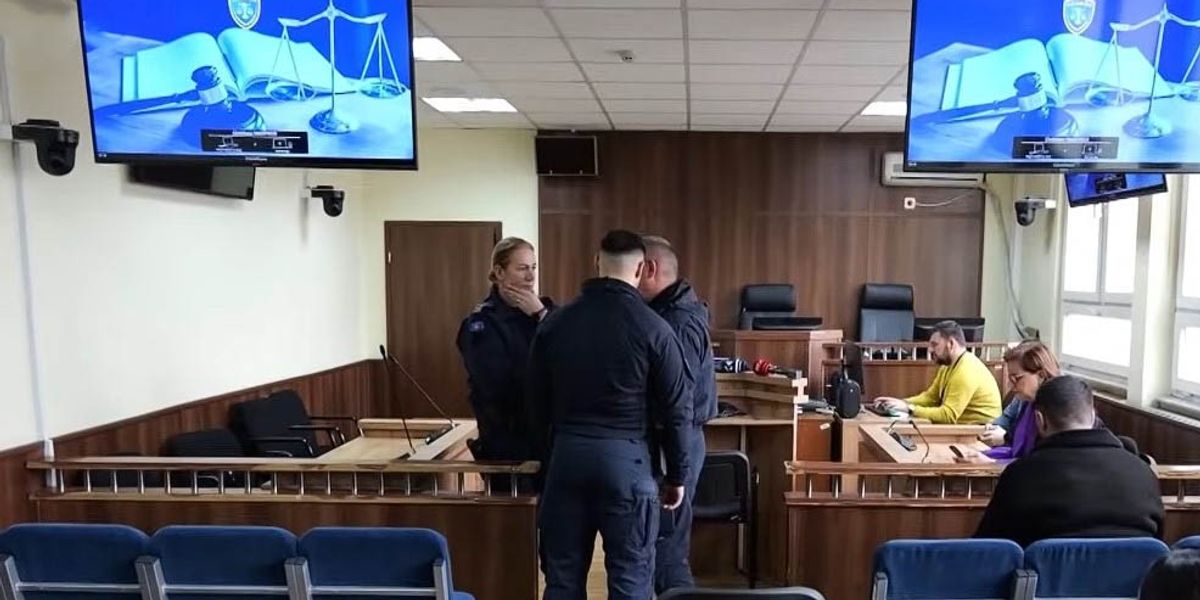
Four months after the Supreme Court upheld the life sentence for Dardan Krivaqen for the murder of his girlfriend, in another case of wife murder, it decided to reduce the sentence. Edmond Lajçi was sentenced to life imprisonment in the first instance for the murder of his wife, but the same sentence was recently reduced to 30 years by the Supreme Court.
The latter justified the reduction of the sentence with the guilty plea by the convicted person. “ The Supreme Court has assessed that the courts of first and second instance have not correctly applied Article 41 of the Criminal Code regarding the imposition of a life sentence.
According to the Supreme Court’s assessment, some of the circumstances considered as particularly aggravating were not supported by evidence, while some of them constitute elements of the criminal offence itself and, for this reason, cannot justify the imposition of the most severe sentence, foreseen by law.
The Supreme Court has emphasized that life imprisonment may be imposed only in cases where there are particularly aggravating circumstances that clearly distinguish the specific case from ordinary cases of the same criminal offence and when a milder sentence would not be proportionate to the gravity of the offence and the culpability of the perpetrator in this case, the Supreme Court has assessed that this legal standard has not been met.
Relying on the principle of individualisation and proportionality of the sentence, as well as on the practice of the European Court of Human Rights, the Supreme Court has assessed that the sentence of 30 years “The term of imprisonment is proportional to the gravity of the criminal offense, the degree of guilt and the dangerousness of the defendant, and that this sentence can achieve the purpose of the sentence, both in terms of individual and general deterrence ,” the Supreme Court’s response states.
According to lawyer Yll Zekaj, judges should carefully analyze cases when deciding on a life sentence. “Publicity should never, no external circumstances should ever, influence the Court’s decision. Courts are independent, courts should act only on the basis of evidence and on the basis of what is provided by the prosecutor in the case files,” said Yll Zekaj – lawyer.
Zekaj also shows that if a person remains in prison for the rest of his life, he is sentenced to life imprisonment by a final decision. “Life imprisonment in the system we have in Kosovo does not mean that the prisoner or person sentenced to life imprisonment will never be released from prison.
Our legislation, our criminal code, provides that even life imprisonment can be reviewed after 30 years of serving the sentence,” said Yll Zekaj – lawyer. Life imprisonment is the highest sentence in the Kosovo penal system. Since the entry into force of the Criminal Code in 2013, it has been imposed in over 10 cases