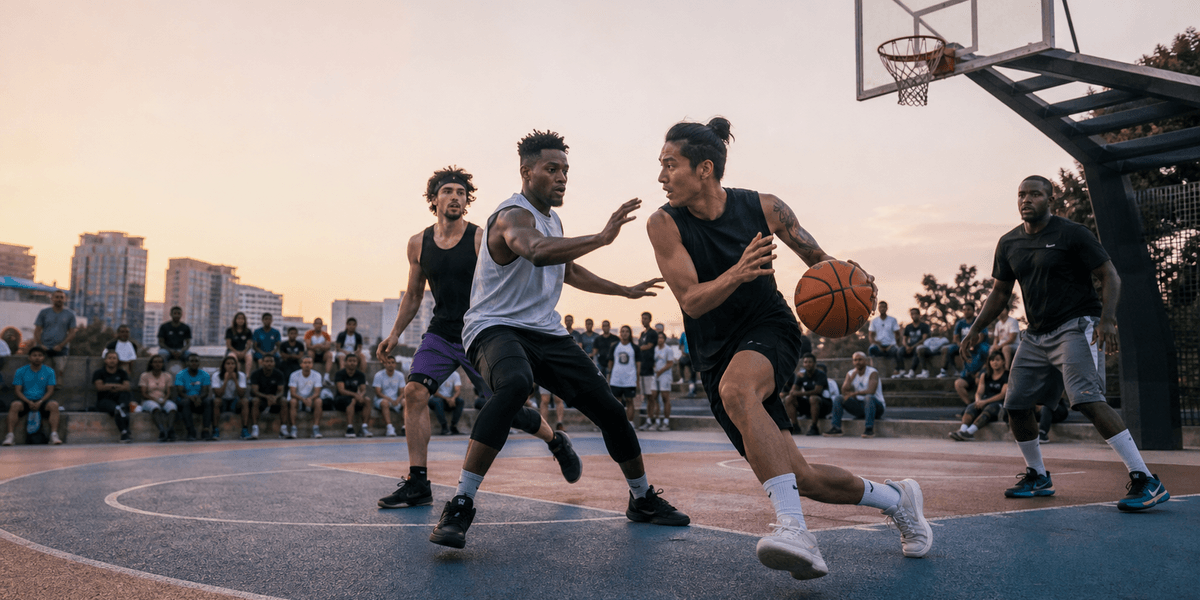
The NBA is still the sport’s biggest shop window, but many of its defining players now come from elsewhere. Stronger domestic leagues and more competitive national teams have added to the picture. Basketball culture now travels easily between countries, bringing local styles with it.
The most important change is that these regions no longer just consume the game; they influence what the game becomes. A Sport Made for International Growth Basketball travels well partly because it is easy to start playing. At the most basic level, all you need is a ball and a hoop.
A full-sized field is not required, either, which makes the sport a natural fit for crowded cities and schoolyards. It is also easy to understand as a spectator. The pace is quick, scoring is frequent and momentum can swing in a matter of minutes. A hard dunk or a deep three does not need much explanation, no matter where the clip is being watched. Then came digital media.
Fans no longer need to live near an NBA market or wait for a weekly television show. Highlights, interviews and debates reach audiences around the world almost as soon as the final buzzer sounds. A league’s reach is no longer measured only by television deals or arena capacity, but by how quickly a moment enters the global conversation.
International Players Changed the NBA The clearest evidence of the sport’s global reach is visible on NBA rosters. International players are not novelty signings or end-of-bench projects anymore. They lead franchises, win major awards and shape how the game is played.
That shift is more than a matter of representation; it has changed scouting priorities and widened the sport’s idea of where elite talent can come from. European basketball has long placed a premium on passing, movement and tactical detail. Other regions bring their own habits and strengths. When players and coaches move between leagues, those ideas mix instead of staying neatly separated.
The exchange goes both ways. Young players outside North America grow up studying the NBA, while American players and coaches increasingly borrow concepts they meet in FIBA play, the EuroLeague and other international competitions. That is why modern basketball feels less like an American product exported unchanged and more like a game being rewritten by everyone who plays it.
The United States remains basketball’s commercial center, but it is no longer the only place setting the agenda. Fans Follow More Than One Competition Today’s supporter rarely follows just one competition. During the same week, a fan might watch the NBA, catch a EuroLeague game and then turn to a FIBA qualifier or major national-team tournament.
A generation ago, that mix would have felt unusual to many casual viewers. Today it is routine. That wider appetite has produced a busy international ecosystem. News outlets, streaming services, fantasy games and betting platforms all compete for fans who move between leagues and time zones. The betting market reflects that cross-border interest, too.
Someone comparing betting sites not on GamStop may find odds on the NBA alongside EuroLeague games and international tournaments. Availability and rules differ by country, and betting carries financial risk, so it is worth checking local regulations and using responsible-gambling limits. More broadly, the internet has loosened the old link between a fan and a single local market.
Following a club thousands of kilometers away can now be almost as routine as checking the score of the team down the road. International Basketball Has Its Own Identity None of this means every league is trying to become a smaller copy of the NBA. International competitions have their own rules, rhythms, traditions and fan cultures, and those differences are a large part of their appeal.
Trying to smooth those differences away would miss the point. European club basketball is an obvious example, with intense arena atmospheres and rivalries that stretch back generations. National-team tournaments add another layer: players who spend most of the season as opponents suddenly share a locker room and represent the same country. For curious fans, that variety is the reward.
Watch outside your usual league and you will see different ideas about defense, ball movement, coaching and player development—not better or worse in every case, just different. The Next Generation Is Already Global The next wave of players is growing up in an even more connected system.
Prospects can make a name at youth tournaments or through online highlights before they reach a major professional league. Scouts see more of them, and talented players have more routes into the game. Successful international stars also make the path feel real for children back home.
A young player in Belgrade, Manila or Dakar does not have to imagine elite basketball as something reserved for athletes raised in the United States. Visibility matters: ambition feels more realistic when the player at the top comes from a city or system you recognize. That creates its own cycle.
Stars draw new fans, those fans strengthen local basketball communities, and some of those communities produce the next generation of players and coaches. Basketball’s global story also says something about modern sport. Geography still matters; local clubs and rivalries give the game much of its character.
But borders have less influence over who plays, watches and feels part of the culture. Globalization has not erased local identity; if anything, it has made that identity easier to export. The NBA will probably remain basketball’s biggest global stage. The sport itself, however, is now far larger than any one league.
From neighborhood courts to sold-out international arenas, basketball has become a shared language—and it is still spreading. The game’s future will not be one style winning out. It will be the continuing argument between all of them.